
China High Quality 3 Phase Soft Starter vs. Traditional Star-Delta Starters: XICHI Engineering Benchmark
Oct 23, 2026
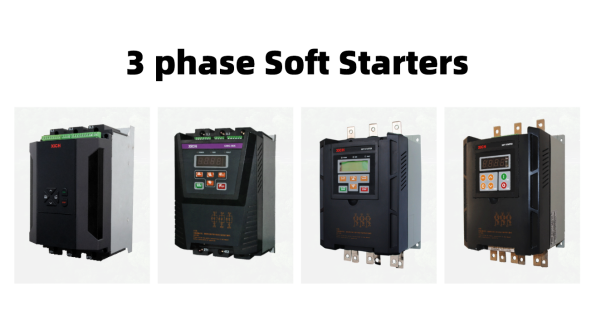
Xian, Shaanxi Oct 22, 2026 (Issuewire.com) - industrial operations, driving heavy equipment across pumping stations, ventilation systems, mining conveyors, and manufacturing facilities. Starting these motors efficiently without causing electrical stress or mechanical damage presents a primary operational challenge for plant engineers. Historically, star-delta (Y-") reduced-voltage starters provided a low-cost method for mitigating high inrush currents. However, as power grids and industrial machinery require higher reliability, continuous step-less acceleration has become essential. Solid-state motor control technology offers a modern alternative through thyristor-based voltage regulation.
Chinese manufacturers such as XICHI Electric have developed high-quality 3 phase soft starter solutions based on this technology, serving demanding applications across industries such as water treatment, mining, HVAC, and manufacturing. Comparing legacy star-delta starters with advanced solid-state soft starters in terms of design, performance, and cost provides a clear basis for evaluating their suitability for modern industrial motor applications.
Technical Principles and Acceleration Dynamics
The fundamental divergence between a traditional star-delta starter and a high quality 3 phase soft starter lies in how voltage and current are regulated during motor acceleration. A star-delta starter relies on electromagnetic contactors to alter the stator winding connections. Upon initiation, the motor windings are connected in a star configuration, reducing the applied line voltage per phase to approximately 57.7 percent of normal rating. After a preset time delay determined by a timer relay, the contactors mechanically disconnect the star wiring and reclose in a delta configuration, applying 100 percent line voltage to the motor.
While this mechanical transition reduces initial locked-rotor current, it creates an inherent open-transition point. As the contactors open and reconnect, a transient current spike and severe mechanical torque surge occur. This secondary current peak frequently approaches or exceeds full-voltage direct-on-line (DOL) start currents, causing transient voltage dips across the local distribution network.
Conversely, solid-state acceleration utilizes silicon controlled rectifiers (SCRs) arranged in anti-parallel pairs across all three input phases. XICHI CMC series soft starters, including models such as the CMC-LX, CMC-HX, and CMC-MX with integrated bypass contactors, manage motor starting through microsecond-level gate pulse control. By continuously adjusting the SCR conduction angle, the controller smoothly ramps voltage from an adjustable initial pedestal to full line potential. This step-less voltage slope eliminates mechanical connection gaps entirely. The absence of abrupt contactor switching provides continuous acceleration, protecting motor shafts, gearboxes, and connected loads from severe physical stress.
Comparative Performance Metrics
Evaluating motor control systems requires comparing measured electrical and mechanical metrics under operating conditions. Across key criteria, electronic soft starters demonstrate distinct operational characteristics when compared to mechanical star-delta setups.
1. Starting Current and Torque Control
A star-delta configuration limits the initial starting current to roughly 33 percent of the direct-on-line value, which typically translates to about 2.0 times the motor's rated full-load current. However, because current and torque are coupled, starting torque drops proportionally to approximately 33 percent of full-voltage torque. This fixed output cannot be tuned. If a load requires higher breakaway torque, a star-delta starter may fail to bring the motor up to speed before switching to delta, causing high current surges during the transition.
In contrast, a 3 phase soft starter provides programmable current-limiting modes, typically selectable between 1.5 and 4.5 times full-load current depending on load demands. XICHI soft starters permit multi-ramp profiling, current-limit acceleration, and voltage-ramp modes. Torque generation can be dynamically shaped to mirror the load profile, preventing stalls during startup while limiting peak current draw on power supply lines.
2. Deceleration and Water Hammer Mitigation
Uncontrolled stopping introduces operational challenges in fluid handling applications. When a star-delta starter receives a stop signal, it immediately disconnects line power. In water supply, sewage, or chemical processing plants, rapid fluid deceleration creates pressure waves known as water hammer. This phenomenon damages piping, loosens flanges, and causes premature valve failure.
Solid-state control addresses this issue by offering dedicated soft-stop functionality. XICHI solid-state starters gradually decrease the SCR conduction angle during shutdown, extending the deceleration curve. Extending fluid deceleration over a controlled time ramp mitigates hydraulic shock waves, eliminating water hammer without requiring specialized mechanical surge relief valves.
3. Protection Capabilities and Diagnostic Monitoring
Traditional star-delta panels rely on separate external components for motor protection, such as thermal overload relays, phase-loss monitors, and individual current transformers. This external architecture increases panel wiring complexity and introduces multiple physical points of failure.
Modern solid-state starters consolidate control and protection into a unified digital system. Models such as the XICHI CMC-LX and CMC-HX incorporate built-in current transformers and microprocessors to monitor operating metrics in real time. Integrated protection functions automatically safeguard against phase imbalance, phase loss, motor overload, underload, power supply overvoltage, undervoltage, and SCR module overheating. Real-time diagnostic metrics are displayed on digital operator interfaces, allowing maintenance teams to review performance data and identify faults promptly.
Boundary Conditions and Selection Framework
Selecting between star-delta starters and electronic soft starters requires evaluating load characteristics, starting duty cycles, grid capacity, and overall system maintenance requirements.
Star-delta starters remain suitable for low-power, light-load applications where initial capital cost is the primary selection criterion. In systems such as small workshop air compressors or light woodworking machinery operating under infrequent start cycles, the mechanical wear from open-transition switching remains within manageable limits.
However, industrial facilities operating heavy-duty machinery require more sophisticated starting methods. Continuous-duty applications--including municipal water pumps, mining crushers, industrial ventilation blowers, and long-distance belt conveyors--benefit significantly from electronic soft starters. In these environments, eliminating mechanical shock reduces strain on mechanical drive components. For installations with limited power supply capacity or dedicated generator feeds, precise current limitation prevents system voltage dips that could trip adjacent equipment.For complex industrial environments, Xi'an XICHI Electric Co., Ltd. provides comprehensive engineering solutions tailored to specific application requirements.
To lower installation footprints and reduce thermal dissipation during continuous operation, XICHI soft starters, such as the CMC-MX series, integrate internal bypass contactors. Once the motor reaches full operational speed, internal control logic energizes the bypass contactors, removing the SCRs from the active current path. This internal bypass arrangement minimizes heat generation during steady-state running while eliminating the panel space and labor costs required for external bypass contactor wiring.
Engineering Benchmark Conclusion
Comparing motor starting methodologies shows that while star-delta starters offer a basic mechanical option for simple, low-power applications, solid-state soft starters provide superior control, continuous protection, and long-term equipment preservation for industrial systems. Xi'an XICHI Electric Co., Ltd. demonstrates how solid-state motor control technology delivers stable performance, adaptable parameter configuration, and reliable motor protection across demanding industrial environments.
For technical specifications, application engineering guidelines, or model matching support, visit the official website: https://www.xichielectric.com/
Source :XI'AN XICHI ELECTRIC CO., LTD.
This article was originally published by IssueWire. Read the original article here.
More News

"You Feel Watched By Something Malicious": 18 Places In The US That Have A Bone-Chilling, Hair-Raising, Teeth-Chattering Vibe Straight Out Of A Horror Movie
"I'm a 6-foot-tall male, and I felt like I had to stick near the few lights at the bus station for my own safety." View Entire Post ›

New Airbnb Rules Will Limit Chores Hosts Can Require
The company will limit the chores hosts can require of guests, responding to complaints from travelers who said they shouldn’t have to do housekeeping while paying cleaning fees.


Hotel Review: Mount Juliet Estate, County Kilkenny
Fresh from an extensive refurbishment, Mount Juliet Estate pairs Georgian character with Michelin-starred dining, championship golf, attentive service and an extraordinary roster of country pursuits across 500 acres in Kilkenny. The post Hotel Review: Mount Juliet Estate, County Kilkenny appeared first on Business Traveller.

American Express Platinum Adds Airbnb Luxe to $600 Lodging Credit
Amex Platinum is venturing beyond hotels. Airbnb Luxe now qualifies for its $600 lodging credit, while a new $250 Experiences benefit sweetens the deal—but one-night FHR stays are losing ground. The post American Express Platinum Adds Airbnb Luxe to $600 Lodging Credit appeared first on Business Traveller.

Hotel Review: The Brazilian Court, Palm Beach
Celebrating its centennial, The Brazilian Court pairs secluded courtyards, residential-style suites and Café Boulud with one of Palm Beach’s best locations, delivering old-world character without feeling frozen in time. The post Hotel Review: The Brazilian Court, Palm Beach appeared first on Business Traveller.

Meet the Judges: Business Traveller Awards 2026
Our global awards were shaped by a panel of experts across the travel, media, design and hospitality industries The post Meet the Judges: Business Traveller Awards 2026 appeared first on Business Traveller.

United Opens Its Largest Airport Lounge in Houston Terminal B
Airport lounges keep getting bigger, and United may have just won the square-footage contest. Houston’s new 54,000-square-foot club seats 800—assuming the crowds do not arrive faster than the furniture. The post United Opens Its Largest Airport Lounge in Houston Terminal B appeared first on Business Traveller.

1st human case of livestock virus Shamonda reported in France
France on Thursday reported the first human case of the Shamonda virus usually found in livestock in a patient who later died, with authorities adding there was no risk to the general population at this stage.

Turkish Airlines Chairman Murat Şeker on Premium, Personalisation and the Path to the Top Three
Turkish Airlines has conquered scale. Now it’s setting its sights on a distinctive guest experience. The post Turkish Airlines Chairman Murat Şeker on Premium, Personalisation and the Path to the Top Three appeared first on Business Traveller.

Help! Why Won’t Travel Insurance Pay for My $17,500 Broken Leg?
An American tourist had emergency surgery in Thailand after tripping and falling at an ice cream counter. Good thing he bought insurance — or so it seemed.

Long COVID patients 'devastated' by impending changes to virtual care access in B.C.
More than 300,000 British Columbians live with long COVID, with many relying on virtual appointments to access the care they need. But health providers are warning impending caps on appointment sizes and changes to fees will create lengthy delays and lead to cutbacks in vital programs.
YOUR NEWS, OUR NETWORK.
Do you have Great News you want to tell the world?
Be it updates about your business or your community, you can make sure that it’s heard by submitting your story to our network reaching hundreds of news sites across 6 verticals.