
China Leading Chelating Resin Heavy Metal Removal Supplier: Solving Mining Wastewater Challenges
Sep 29, 2026
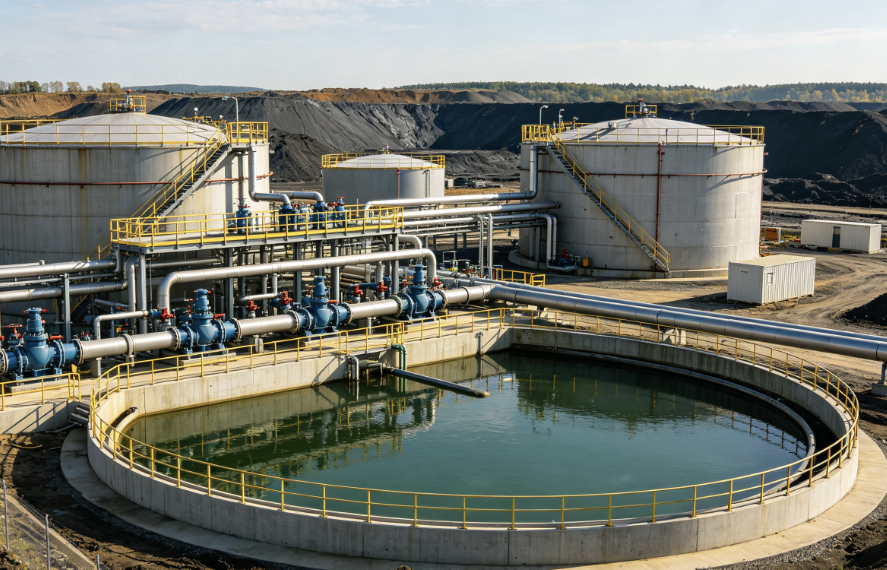
Xian, Shaanxi Sep 28, 2026 (Issuewire.com) - The mining and metallurgical industries face growing pressure worldwide to manage complex wastewater streams responsibly. Acid mine drainage and hydrometallurgical effluents contain toxic heavy metal ions that threaten local aquatic ecosystems if operators discharge them without proper treatment. Standard precipitation techniques often fail to reach strict discharge limits, especially when processing high-volume, low-concentration streams. To address these operational vulnerabilities, mineral processing facilities are turning to targeted separation solutions. Partnering with a recognized China Leading Chelating Resin Heavy Metal Removal Supplier provides environmental engineers with specialized polymeric tools designed for extreme selectivity. These functionalized materials capture target heavy metals efficiently while resisting severe matrix interference from non-target salts. As global discharge regulations become more stringent, understanding how specialized chelating resins solve complex water treatment challenges offers critical insights for modern sustainable mining operations.
The Mining Wastewater Dilemma: Matrix Interference, High Salinity, and Strict Emission Thresholds
Mining wastewater presents one of the most challenging chemical environments in industrial water treatment. Acid mine drainage typically exhibits low pH levels, high total dissolved solids, and elevated concentrations of background ions like sodium, calcium, magnesium, and iron. These non-target cations create intense competition for traditional ion exchange media. When operators attempt to remove trace toxic metals using standard resins, the non-target ions quickly saturate active exchange sites. Consequently, standard media suffer from rapid breakthrough and frequent regeneration requirements.
Traditional chemical precipitation methods, such as lime neutralization, also create significant operational bottlenecks. Although precipitation reduces bulk heavy metal loads, the process generates immense volumes of toxic chemical sludge. Transporting and landfilling this hazardous waste imposes heavy recurring costs on mining operations. Furthermore, lime precipitation cannot achieve sub-parts-per-million emission thresholds for persistent contaminants like copper, nickel, cadmium, or mercury. As environmental agencies enforce strict micro-pollutant discharge limits, mining plants require advanced polishing technologies that operate reliably in high-salinity matrices.
Transitioning from simple neutralization to selective metal recovery offers both environmental compliance and economic value. Modern mineral processing plants view wastewater not merely as an environmental liability, but as a secondary resource stream. Recovering dissolved copper, nickel, and cobalt from hydrometallurgical rinse waters allows facilities to offset wastewater treatment expenditures. Achieving this goal requires specialized separation media that bind target heavy metal cations exclusively while ignoring abundant background salts.
Molecular-Level Selectivity: The Mechanism Behind Sunresin SEPLITE Chelating Resins
Chelating resins achieve superior selectivity through custom-engineered functional groups anchored to a rigid polymeric matrix. Unlike standard cation exchange media that bind ions primarily through weak electrostatic attraction, chelating polymers form stable coordination complexes with specific metal cations. Active functional groups, such as iminodiacetic acid, aminophosphonic acid, and bispicolylamine, act as organic ligands. These ligands donate lone electron pairs to form covalent-like coordinate bonds with transition metal ions.
This molecular coordination mechanism explains why chelating media excel in hostile chemical environments. The thermodynamic stability of metal-ligand complexes varies significantly depending on the target metal's ionic structure. For example, bispicolylamine functional groups exhibit exceptionally high affinity for copper and nickel, even in solutions with extremely low pH values. Similarly, thiol and thiourea functional groups form virtually irreversible coordinate bonds with heavy metals like mercury. Because the binding energy for target transition metals far exceeds that for calcium or magnesium, the resin retains its selectivity even when background salt concentrations are thousands of times higher.
Physical durability plays an equally vital role in industrial mining applications. Resin beads must withstand continuous hydraulic pressure, osmotic shock during acid regeneration, and mechanical abrasion from slurry particles. Advanced macroporous bead synthesis ensures high osmotic stability and crush strength. As a result, the media maintains uniform hydrodynamic flow, low pressure drops, and consistent exchange kinetics over hundreds of operational cycles, extending overall media service life.
Engineering Validation: Translating Cross-Industry Expertise to Mining Effluents
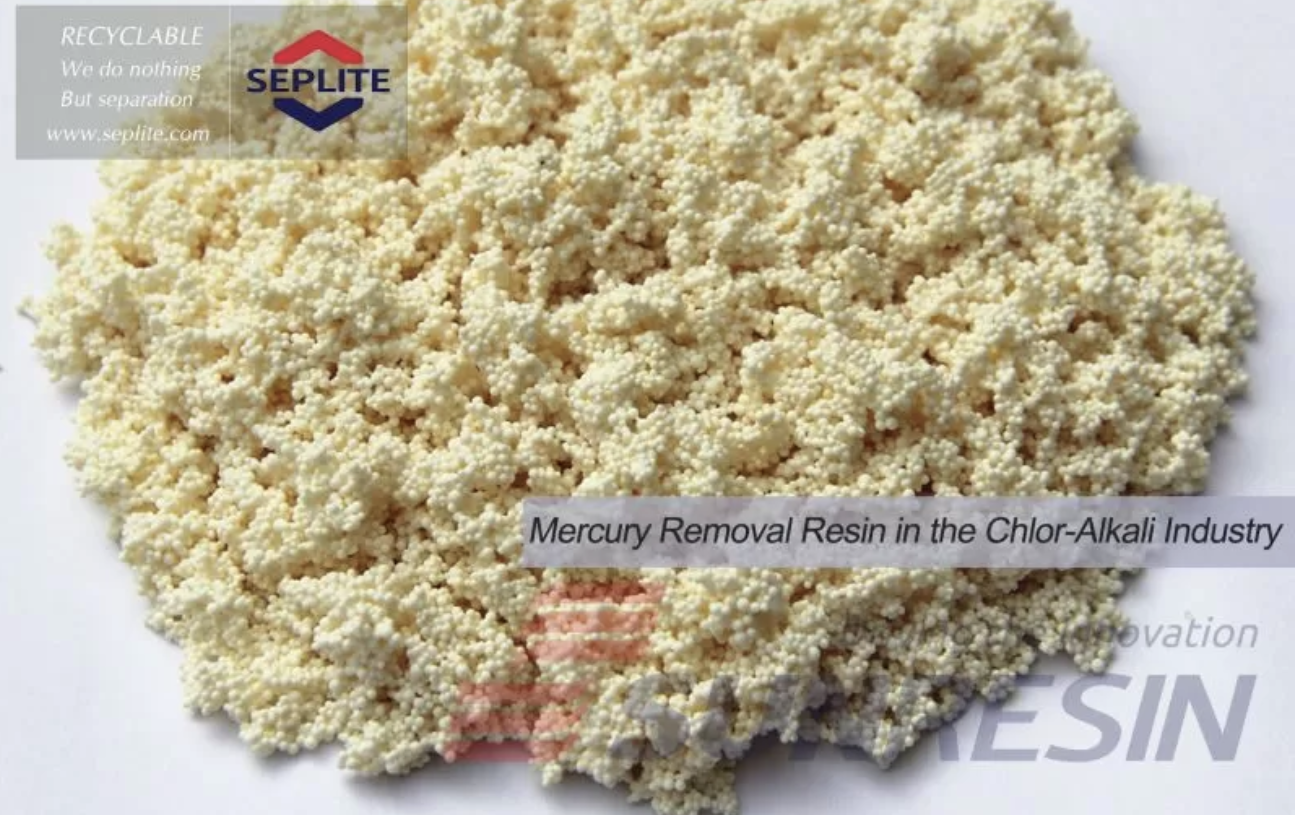
Deploying chelating resins effectively in mining applications draws heavily on technical lessons learned from other demanding chemical sectors. For instance, the chlor-alkali industry requires deep brine purification to protect sensitive ion-exchange membranes from trace metal contamination. Facilities utilizing targeted ion exchange technology for deep mercury removal in the chlor-alkali industry consistently reduce heavy metal concentrations from parts-per-million levels down to single-digit parts-per-billion thresholds. This proven cross-industry capability demonstrates the real-world reliability of chelating media under severe chemical stress.
In mining and hydrometallurgical flowsheets, chelating resins perform critical roles in both effluent polishing and primary metal recovery. Placed after primary precipitation steps, chelating media act as secondary guard beds that strip residual toxic metals down to non-detectable levels. This secondary polishing step guarantees full compliance with local discharge regulations, protecting plants from environmental penalties and operational shutdowns.
Furthermore, chelating resin beds concentrate trapped target metals into compact, high-purity eluate streams during chemical regeneration. When operators regenerate saturated resin beds with dilute mineral acids, the resulting liquid contains concentrated copper, nickel, or zinc. Facilities direct this concentrated stream back into main electrowinning or precipitation circuits. Consequently, the treatment process converts an environmental compliance challenge into a closed-loop resource recovery operation.
End-to-End Capability: Sunresin's Integrated EPC and Technology Partnership
Successfully implementing chelating resin systems requires seamless coordination between polymer chemistry, column engineering, and system automation. Global separation technology provider Sunresin (Sunresin New Materials Co. Ltd.) addresses these industrial demands by offering complete technical solutions tailored to complex mining wastewater. By manufacturing proprietary SEPLITE® chelating resins under strict quality management systems, the producer guarantees batch-to-batch consistency and high performance.
Industrial implementation begins with detailed feed stream analysis and empirical validation. Sunresin conducts extensive laboratory feasibility testing and field-scale pilot trials to establish exact breakthrough curves, flow velocities, and regeneration protocols. This empirical approach eliminates operational risks, allowing mining engineers to design full-scale treatment facilities with accurate capital and operational cost projections. Over the years, Sunresin has successfully deployed custom separation systems across global mining and metallurgical facilities.
In addition to media manufacturing, Sunresin New Materials Co. Ltd. delivers comprehensive Engineering, Procurement, and Construction (EPC) services for automated wastewater treatment skids. Integrating proprietary SEPLITE® chelating media with custom-engineered vessels, automated valve manifolds, and real-time monitoring instruments ensures reliable long-term performance. Through global technical support and ongoing process optimization, Sunresin helps mining enterprises overcome complex wastewater challenges, achieve environmental compliance, and maximize sustainable material recovery.
For more information regarding chelating resin technologies and mining wastewater solutions, visit https://www.seplite.com/.
Media Contact
Sunresin New Materials Co. Ltd.
+86 29-8669 1600
Sunresin Park, No. 135 Jinye Rd, Xi’an Hi-tech Industrial Development Zone, Shaanxi, China
Source :Sunresin New Materials Co. Ltd.
This article was originally published by IssueWire. Read the original article here.
More News

How the Shaw Prize in Computer Science has been created
Since the Shaw Prize was first presented in 2004, the prestigious annual awards have been presented in three categories: astronomy, life science and medicine, and mathematical sciences. A fourth category – computer science – was announced earlier this year in a move that is fully in keeping with the original vision of Run Run Shaw, the late Hong Kong film mogul and legendary philanthropist, who set everything in motion. His intention was to recognise the quest for knowledge and honour...

“I WILL NEVER SET FOOT IN THAT TOWN AGAIN”: 76 Places Around The World People Recommend You Never, Ever, Ever Visit
"Overall, it was a really strange place, in a way that makes the pit of your stomach tense up, and makes you want to run away." View Entire Post ›

Style Edit: 45R’s new knits spotlight texture and Japanese craftsmanship
The appeal of a good knit is often immediate, from the softness against the skin to the reassuring volume and warmth. At 45R, those qualities begin well before a garment takes shape. The Japanese label’s latest selection puts the making process in focus, bringing together airy merino, characterful Shetland wool and the flecked textures of Donegal tweed. Founded in Tokyo in 1977, 45R approaches clothing through monozukuri, or the “art of making”, a philosophy centred on respect for craft and...

If You Love Everything About Traveling Except The Actual Travel Part, Check Out These 28 Things
Sitting in a plane for hours isn't so bad when you're kicking your feet up on this inflatable foot rest. View Entire Post ›

Suit linings: the link between the NFL draft and London’s Savile Row
Back in April, suit jackets lined with interesting graphics and prints emerged as one of the more unusual fashion trends at the 2026 NFL draft in Pittsburgh, Pennsylvania, the annual event where professional American football teams pick out the best young players looking to enter the league. Colton Hood, then a Tennessee cornerback, now on the New York Giants’ roster, rocked up in a cobalt-blue jacket that, when opened, revealed a swathe of family photographs across the lining, chronicling his...

"Yes, It Is Weird As F*ck": 29 Americans Are Sharing What "Reverse Culture Shocks": They Faced After Moving Back Home From Abroad, And It Just Shows How The US Is Not The Best
"Something I didn't miss when I was abroad was the tipping culture in the United States. Here, tipping is expected everywhere for everything." View Entire Post ›

O3’s Luca Yang hated studying. So he built 24/7 study cafes to motivate people like him
At 22, Luca Yang was running a small teaching company in New Zealand after quitting a six-figure finance job that he hated. It had humble beginnings, where he tutored English online for A$25 (US$17.55) per hour just to get by. When one of his students got into Oxford, word spread: one student became 50, then 500. By most measures, he had already won the start-up lottery. “It was producing a lot of money, but it wasn’t something I actually loved doing,” says Yang, who was born and raised in...

Meet Barbera Thornhill, Trump’s anti-trafficking ambassador, going viral for her ‘Maga face’
After Katie Zacharia was sacked as the White House press secretary amid questions about her legal qualifications, another newly appointed Trump official is going viral. Barbera Thornhill is US President Donald Trump’s new Ambassador-at-Large to Monitor and Combat Trafficking in Persons. State Department official Riley Barnes shared the 78-year-old’s portrait on X to celebrate her appointment, but the post gained traction for all the wrong reasons. Social media users tore into Thornhill’s...

This Manchester Hotel Has A Whimsical, Storybook-Like Suite That Made Me Feel Like A Kid Again
...The restaurant Sister Moon is another story. View Entire Post ›

28 Travel Products That Are Worth The Extra Space If You’re Traveling With Kiddos
Because keeping your kids happy is over half the vacay battle, and YOU CAME TO WIN with these finds on your side. View Entire Post ›

46 Travel Products That Just Make Sense To Buy If You’re Going On Multiple Trips Before The Year Ends
Whether you're traveling near or far or in between, you definitely need this foldable 3-in-1 charger and these holy grail travel pants as your copilots. View Entire Post ›

I Spent 5 Days In One Of America's Most Overlooked Places, And I Think I Found My New Favorite Place On Earth
If you know, you really know. View Entire Post ›
YOUR NEWS, OUR NETWORK.
Do you have Great News you want to tell the world?
Be it updates about your business or your community, you can make sure that it’s heard by submitting your story to our network reaching hundreds of news sites across 6 verticals.