
Comparing Data Allowances: Utilizing a Reliable Virus Attack Sd Card Recovery Freeware with 2GB Quota
Sep 29, 2026
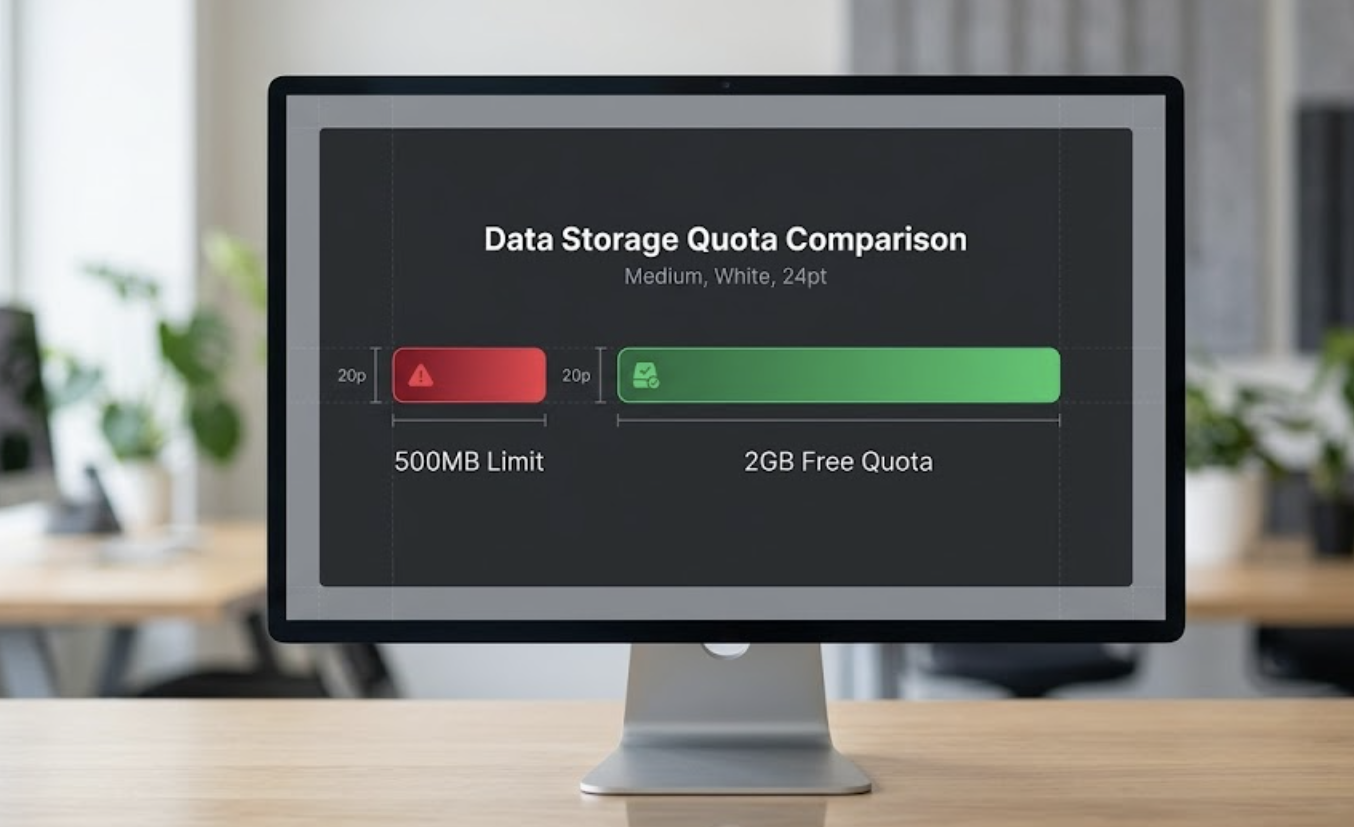
Hong Kong, Hong Kong S.A.R. Sep 29, 2026 (Issuewire.com) - Digital storage hardware frequently interfaces with multiple host devices throughout a standard creative workflow. This constant cross-platform movement exposes removable flash media like SD cards and MicroSD cards to severe malware threats. Viruses often strike without warning, targeting the core partition framework or hiding directories entirely from the user view. Consequently, an infected memory card appears completely blank, creating intense panic for content creators and operators. In these high-stress situations, individuals urgently require a Reliable Virus Attack Sd Card Recovery Freeware (https://www.xappset.com/xrecovery/) to isolate their digital assets before further corruption sets in. Furthermore, malicious scripts frequently corrupt index tables, making standard file explorers useless for finding hidden assets. However, the initial phase of software selection often introduces unnecessary friction due to artificial limitations. Most standard utilities on the market restrict their complimentary tiers to minuscule volume caps. This dynamic introduces anxiety, forcing users to evaluate the precise memory capacity needed to rescue their storage media. Adopting a methodical approach to volumetric utility calibration allows operators to avoid predatory monetization traps. Instead of downloading arbitrary software packages blindly, users must calculate the exact data requirements of their immediate salvage task. This logical strategy protects financial resources and ensures that critical visual assets return safely to a secure local system. By analyzing capacity requirements objectively, users maintain control over their data rescue process. Head-to-Head Allocation: Decoding the 500MB Ceiling vs. the 2GB Operational Runway When comparing the available options in the utility marketplace, the quantitative gap between data allowances becomes immediately clear. Traditional software platforms like Disk Drill maintain a strict 500MB limit for their complimentary extraction tiers. While a half-gigabyte ceiling might suffice for basic text files, it quickly fails when handling modern high-resolution media. This restrictive strategy often acts as a conversion trap during an active digital emergency. For example, a technician might spend hours executing a deep scan on a corrupted SD card. Unfortunately, the export function locks up halfway through the process because the payload exceeds the artificial limit. The user must then purchase an expensive commercial subscription immediately to avoid losing their scanning progress. To counter this frustrating operational model, the application framework designed by Xcel Labs Limited provides a completely different experience. By establishing a substantial baseline allowance of two gigabytes, the development team gives users a realistic operational runway. This extended data allowance allows people to verify the true efficiency of the underlying scanning engine without encountering immediate financial barriers. Therefore, comparing a 500MB cap against a 2GB capacity reveals that the larger allocation respects the actual needs of modern device owners. It allows users to complete genuine recovery tasks rather than just viewing a list of lost files. Practical Capacity Estimation: Calculating Real-World Asset Sufficiency on a 2GB Quota To appreciate the real-world utility of a two-gigabyte allowance, one must translate binary measurements into actual media assets. A single compressed high-resolution JPEG file from a modern camera averages around three to five megabytes in size. Therefore, a 2GB data quota can successfully restore roughly 400 to 600 complete images from an infected memory card. For business professionals, this volume easily covers thousands of essential spreadsheets, presentations, and standard text documents. This mathematical reality proves that a 2GB allocation completely resolves the majority of personal media crises without requiring a financial transaction. Most individual users only need to rescue a specific folder of photos or an essential document archive after a malware attack. However, professional digital studios or high-volume commercial media agencies often manage massive raw video files that easily exceed these standard limits. When handling large-scale video projects or entire drive clones, users can seamlessly transition to tailored recovery structures (https://www.xappset.com/xrecovery/plans/) that accommodate heavy extraction workloads. These flexible plans offer predictable monthly or annual costs, ensuring that teams can scale their capabilities when necessary. By providing clear diagnostic metrics beforehand, the interface allows individuals to audit their files thoroughly. This clear separation ensures that users only recover healthy payloads while discarding malicious script remnants, optimizing the overall process. Architectural Isolation: Preventing Secondary Malware Propagation During Sector Carving Recovering data from a virus-infected device introduces serious cybersecurity challenges that require strict architectural boundaries. If a utility attempts to parse an infected SD card while communicating with external cloud servers, hidden malware scripts might propagate across the network. Therefore, running extraction processes within a completely offline, local sandboxed environment is absolutely vital for system safety. The local execution architecture managed by XRecovery (Xcel Labs Limited) (https://www.xappset.com/about-us/) addresses this precise security concern by isolating the entire scanning process. The utility reads raw binary clusters directly from the flash drive without executing the underlying system scripts or hidden trojans embedded in the partition tables. This non-destructive scanning sequence ensures that the malware remains entirely dormant while the software extracts clean file signatures. XRecovery works as a self-contained unit, ensuring that no data leaks occur during the sector carving phase. By combining rigorous local data privacy with a functional 2GB allocation, the software establishes concrete transactional trust with technical operators and IT fleets. System integrators can securely deploy the application onto infected workstations, knowing that the environment remains fully protected. This focus on local safety ensures that corporate assets remain secure throughout the entire diagnostic pipeline. Consequently, businesses avoid the double threat of data loss and secondary malware infection. Strategic Conclusion: How Fair Allocation Tiers Transform Free Utilities into Scale Drivers The current evolution of the utility software marketplace increasingly favors transparent performance over predatory monetization tactics. As users become more sophisticated, the demand for honest, value-first software design continues to alter the industry standard. Providing an authentic, generous free tier demonstrates engineering confidence and builds long-term customer loyalty naturally. The broader engineering ecosystem guided by XAppSet reflects this transition toward balanced software distribution and user-centric design. By eliminating arbitrary restrictions and hidden conversion traps, the developers lower the friction associated with urgent IT troubleshooting. This open distribution model creates highly predictable outcomes for software distributors, retail hardware providers, and independent technical consultants who wish to integrate reliable utilities into their standard offerings. Partnering with a developer that respects user capacity limits enables service providers to offer superior troubleshooting options without cost shocks. Ultimately, a fair data allowance serves as an excellent foundation for mutual commercial growth and technological collaboration. System managers and independent professionals can discover robust desktop options that protect their data assets efficiently without straining their maintenance budgets. Maintaining realistic pricing structures ensures that data safety remains accessible to everyone rather than just well-funded corporate entities. For organizations seeking advanced integration options and secure local applications, complete details remain available through the primary developer workspace at https://www.xappset.com/.
Source :Xcel Labs Limited
This article was originally published by IssueWire. Read the original article here.
More News

How the Shaw Prize in Computer Science has been created
Since the Shaw Prize was first presented in 2004, the prestigious annual awards have been presented in three categories: astronomy, life science and medicine, and mathematical sciences. A fourth category – computer science – was announced earlier this year in a move that is fully in keeping with the original vision of Run Run Shaw, the late Hong Kong film mogul and legendary philanthropist, who set everything in motion. His intention was to recognise the quest for knowledge and honour...

“I WILL NEVER SET FOOT IN THAT TOWN AGAIN”: 76 Places Around The World People Recommend You Never, Ever, Ever Visit
"Overall, it was a really strange place, in a way that makes the pit of your stomach tense up, and makes you want to run away." View Entire Post ›

Style Edit: 45R’s new knits spotlight texture and Japanese craftsmanship
The appeal of a good knit is often immediate, from the softness against the skin to the reassuring volume and warmth. At 45R, those qualities begin well before a garment takes shape. The Japanese label’s latest selection puts the making process in focus, bringing together airy merino, characterful Shetland wool and the flecked textures of Donegal tweed. Founded in Tokyo in 1977, 45R approaches clothing through monozukuri, or the “art of making”, a philosophy centred on respect for craft and...

If You Love Everything About Traveling Except The Actual Travel Part, Check Out These 28 Things
Sitting in a plane for hours isn't so bad when you're kicking your feet up on this inflatable foot rest. View Entire Post ›

Suit linings: the link between the NFL draft and London’s Savile Row
Back in April, suit jackets lined with interesting graphics and prints emerged as one of the more unusual fashion trends at the 2026 NFL draft in Pittsburgh, Pennsylvania, the annual event where professional American football teams pick out the best young players looking to enter the league. Colton Hood, then a Tennessee cornerback, now on the New York Giants’ roster, rocked up in a cobalt-blue jacket that, when opened, revealed a swathe of family photographs across the lining, chronicling his...

"Yes, It Is Weird As F*ck": 29 Americans Are Sharing What "Reverse Culture Shocks": They Faced After Moving Back Home From Abroad, And It Just Shows How The US Is Not The Best
"Something I didn't miss when I was abroad was the tipping culture in the United States. Here, tipping is expected everywhere for everything." View Entire Post ›

O3’s Luca Yang hated studying. So he built 24/7 study cafes to motivate people like him
At 22, Luca Yang was running a small teaching company in New Zealand after quitting a six-figure finance job that he hated. It had humble beginnings, where he tutored English online for A$25 (US$17.55) per hour just to get by. When one of his students got into Oxford, word spread: one student became 50, then 500. By most measures, he had already won the start-up lottery. “It was producing a lot of money, but it wasn’t something I actually loved doing,” says Yang, who was born and raised in...

Meet Barbera Thornhill, Trump’s anti-trafficking ambassador, going viral for her ‘Maga face’
After Katie Zacharia was sacked as the White House press secretary amid questions about her legal qualifications, another newly appointed Trump official is going viral. Barbera Thornhill is US President Donald Trump’s new Ambassador-at-Large to Monitor and Combat Trafficking in Persons. State Department official Riley Barnes shared the 78-year-old’s portrait on X to celebrate her appointment, but the post gained traction for all the wrong reasons. Social media users tore into Thornhill’s...

This Manchester Hotel Has A Whimsical, Storybook-Like Suite That Made Me Feel Like A Kid Again
...The restaurant Sister Moon is another story. View Entire Post ›

28 Travel Products That Are Worth The Extra Space If You’re Traveling With Kiddos
Because keeping your kids happy is over half the vacay battle, and YOU CAME TO WIN with these finds on your side. View Entire Post ›

46 Travel Products That Just Make Sense To Buy If You’re Going On Multiple Trips Before The Year Ends
Whether you're traveling near or far or in between, you definitely need this foldable 3-in-1 charger and these holy grail travel pants as your copilots. View Entire Post ›

I Spent 5 Days In One Of America's Most Overlooked Places, And I Think I Found My New Favorite Place On Earth
If you know, you really know. View Entire Post ›
YOUR NEWS, OUR NETWORK.
Do you have Great News you want to tell the world?
Be it updates about your business or your community, you can make sure that it’s heard by submitting your story to our network reaching hundreds of news sites across 6 verticals.