
Integrated Ship Panel Production Line Automation: Building Connected Workflows in Shipyard Fabrication
Sep 29, 2026
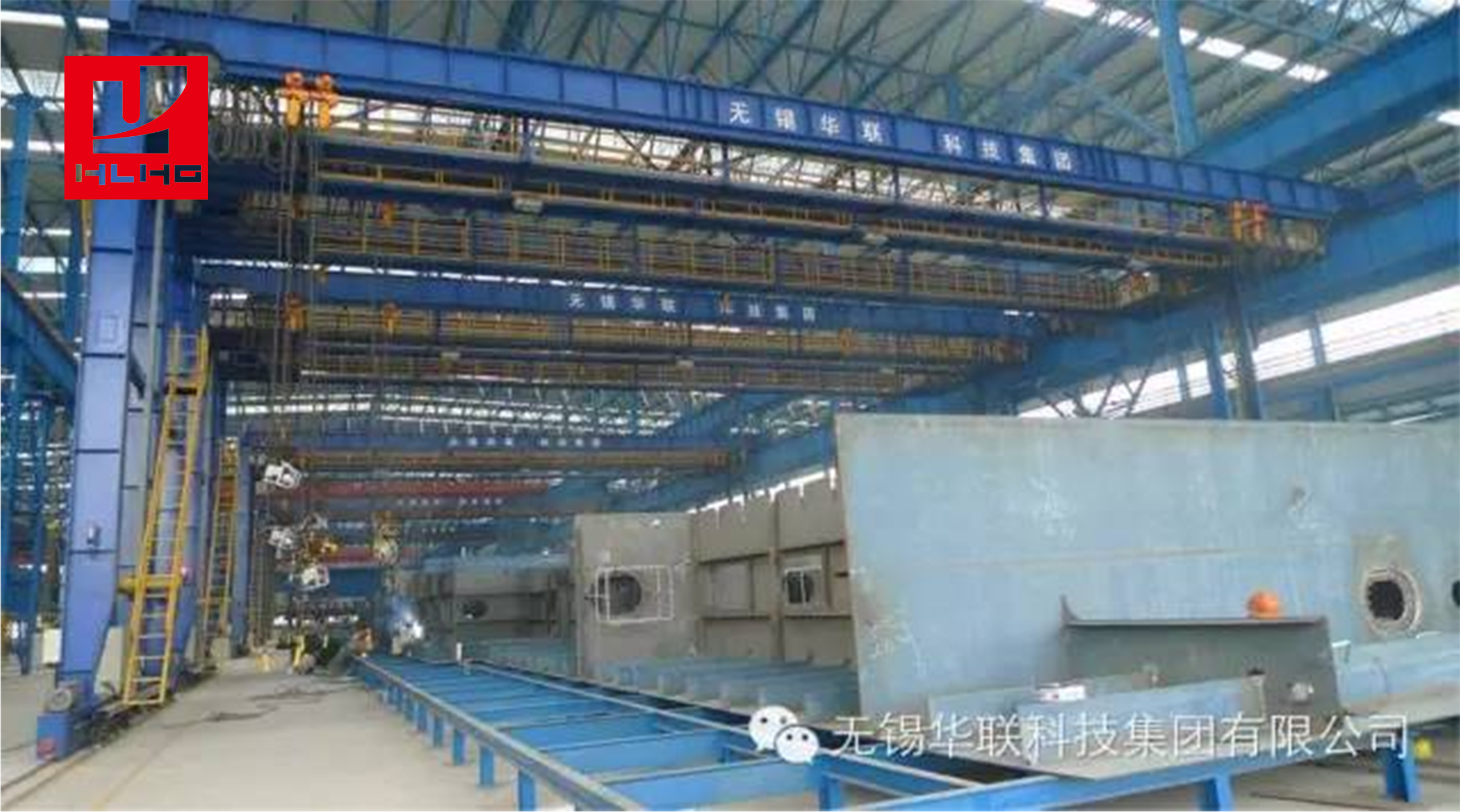
Wuxi, Jiangsu Sep 28, 2026 (Issuewire.com) - A modern ship panel production line connects complex fabrication stages into a synchronized manufacturing flow. Advancing shipyard production systems since its founding in 1987, Wuxi Hualian Science & Technology Group--recognized across international maritime markets as Hualian, structures panel fabrication around staged physical movement and quality verification. High-performance shipyard automation requires more than placing independent machinery in physical sequence. Each production handoff demands a verified workpiece, a documented quality status, and a receiving station ready for transfer. Establishing disciplined workflow handoffs prevents upstream fabrication defects from compounding into massive structural misalignment in downstream erection stages.
Define what crosses each handoff
A dependable production handoff requires transferring three critical project elements: verified physical geometry, structural workpiece identity, and documented inspection clearance. Material tracking systems must associate each plate assembly with its unique block allocation, steel specification, and approved construction drawings. Workpieces entering a downstream station must satisfy defined geometric tolerances. Overall panel width, plate thickness, stiffener spacing, and reference edge alignment must fall within tight millimeter limits. Handing over twisted or incorrectly aligned blanks forces downstream automated carriages to fault. Furthermore, each handoff marks an irreversible transition in structural value. Straightening distorted plate skins after welding transverse web frames is extraordinarily difficult and expensive. Validating joint geometry before advancing panels guarantees predictable downline flow.
Establishing standardized verification gates ensures that receiving workstations inherit structurally sound assemblies, eliminating costly disassembly and rework during subsequent block fitting. Digital identification tags linked to barcode scanners verify plate steel grades and thickness before automated welding arcs ignite, preventing accidental welding parameter mismatches. Maintaining datum consistency across transfers guarantees that robotically marked reference lines align perfectly with stiffener mounting locations. Laser distance meters and digital angle sensors mounted at transfer stations measure web plate squareness before assembly begins. Automated interlocking stops halt conveyor movement if plate diagonal measurements exceed project tolerance limits. Immediate automated feedback prevents out-of-square panels from entering welding gantries. Standardizing edge bevel profiles before transfer ensures uniform joint penetration during automated welding. Ultrasonic thickness gauges confirm plate gauge conformity, alerting operators if mill thickness tolerances deviate from engineering drawing specifications.
Keep inspection and repair inside the production route
Automated panel fabrication lines cannot assume zero defect rates. Welding imperfections, including localized porosity, slag inclusions, or incomplete root penetration, occasionally occur due to plate mill scale or voltage fluctuations. Standard shipyard panel lines integrate dedicated non-destructive examination and repair buffers directly between primary workstations. For example, positioning an inspection station immediately following single-sided plate butt welding enables technicians to perform ultrasonic and visual checks while the plate rests on motorized rolls. Minor weld defects can be ground out and repaired on-station using certified procedures before the plate receives longitudinal stiffeners. Containing quality control inside the line boundary prevents flawed assemblies from contaminating downstream assembly stages.
Integrating rapid defect remediation stations maintains unbroken manufacturing momentum, ensuring that structural hull blocks advance toward the dry dock without quality holds. Providing well-lit inspection access with overhead fume extraction empowers quality auditors to complete non-destructive examinations safely without stopping conveyor transit. Documenting inspection sign-offs electronically within the line database provides instant traceability required by visiting classification society surveyors. Providing motorized grind-out stations with integrated vacuum hoods allows welders to eliminate root flaws quickly without filling the bay with abrasive dust. Immediate local repair prevents defective panels from reaching downstream stiffener mounting bays.
Find the constraint in the work, not in the machine label
Manufacturing bottlenecks in shipyard panel bays rarely stem from torch travel speeds alone. Cycle times are primarily governed by manual fit-up complexity, crane availability, tack welding delays, and slag cleaning. Planners must calculate the true station balance across the entire bay. While an automatic multi-torch stiffener welder may travel at 800 mm per minute, loading and clamping twenty individual bulb flats requires substantial preparation time. Installing motorized infeed conveyors and automated stiffener loading arms balances line takt time. Aligning material handling speed with arc-on time ensures that capital-intensive welding gantries operate at maximum capacity.
Analyzing complete workstation cycle times prevents shipbuilders from purchasing oversized welding power sources when material handling speed is the true limiting factor. Buffer zones between butt welding, stiffener mounting, and web frame fitting absorb minor process variations, keeping high-value machines continuously operating. Stiffener tacking speed often dictates overall line cadence. Employing dedicated pneumatic clamping jigs accelerates tack welding cycles, allowing longitudinal stiffeners to be locked quickly. Mechanized clamping eliminates manual wedge driving, protecting plate surfaces from mechanical gouges. Staging longitudinal stiffeners in kitted sets beside the conveyor reduces crane waiting times. Forklift loading cassettes deliver pre-cut bulb flats directly to the operator platform, maintaining continuous feeding into hydraulic mounting gantries.
Separate physical coordination, machine settings and plant data
Designing robust production automation requires maintaining clear separation between three operational layers. The physical layer governs conveyor drives, alignment stops, hydraulic clamps, and mechanical interlocks that ensure worker safety. The process control layer manages digital welding power sources, seam tracking sensors, wire feed rates, and travel speeds. Programmable logic controllers store qualified welding parameters, ensuring repeatable heat input across varied steel grades. The plant data layer links the production line to shipyard planning systems. Nesting data, cutting schedules, and panel release records transfer electronically without requiring complex software integrations on individual machine controllers. Decoupling data communications from real-time motion control safeguards machinery reliability, preventing network latency from interrupting active submerged arc welding passes. Dedicated industrial fieldbus networks connect machine sub-panels without overburdening central plant servers. Isolated control loops guarantee millisecond-level responsiveness for critical safety stops and welding head position corrections. This robust architecture prevents communication delays during high-speed gantry travel.
Measure accepted flow against a consistent baseline
Shipyard productivity cannot be measured by gross tonnage alone. Delivering hundreds of tons of distorted panels that require weeks of flame straightening in the dry dock degrades shipyard profitability. Management teams should evaluate performance by accepted square meters of completed panel blocks delivered on schedule with zero defect rework. Synchronized automation delivers predictable throughput and reduces dry dock labor. Tracking defect-free block completions provides a true metric of factory efficiency, aligning machinery performance with overall shipyard delivery commitments. Tracking dimensional conformance through digital laser scans provides verifiable records for shipowners and classification societies. Consistent panel geometry accelerates erection dock turnover, maximizing annual shipyard vessel deliveries.
Shipbuilders planning panel line modernization can consult Hualian to configure balanced production workflows and automated equipment cells: https://www.hualianoversea.com/. Hualian provides comprehensive engineering designs that unite heavy machinery with dependable shipyard fabrication workflows.
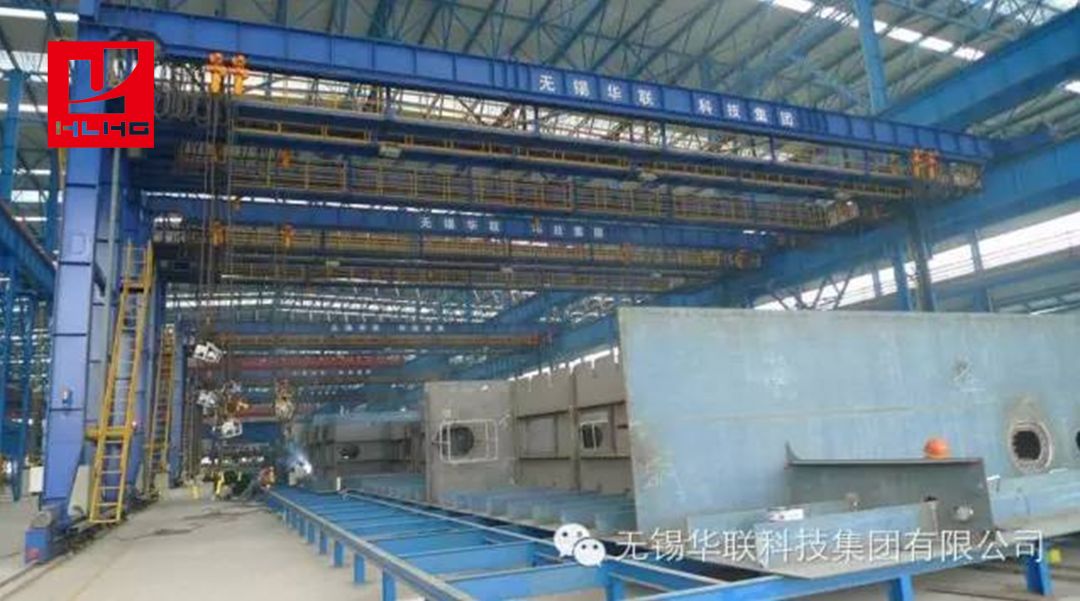
Source :Wuxi Hualian Science & Technology Group
This article was originally published by IssueWire. Read the original article here.
More News

How the Shaw Prize in Computer Science has been created
Since the Shaw Prize was first presented in 2004, the prestigious annual awards have been presented in three categories: astronomy, life science and medicine, and mathematical sciences. A fourth category – computer science – was announced earlier this year in a move that is fully in keeping with the original vision of Run Run Shaw, the late Hong Kong film mogul and legendary philanthropist, who set everything in motion. His intention was to recognise the quest for knowledge and honour...

“I WILL NEVER SET FOOT IN THAT TOWN AGAIN”: 76 Places Around The World People Recommend You Never, Ever, Ever Visit
"Overall, it was a really strange place, in a way that makes the pit of your stomach tense up, and makes you want to run away." View Entire Post ›

Style Edit: 45R’s new knits spotlight texture and Japanese craftsmanship
The appeal of a good knit is often immediate, from the softness against the skin to the reassuring volume and warmth. At 45R, those qualities begin well before a garment takes shape. The Japanese label’s latest selection puts the making process in focus, bringing together airy merino, characterful Shetland wool and the flecked textures of Donegal tweed. Founded in Tokyo in 1977, 45R approaches clothing through monozukuri, or the “art of making”, a philosophy centred on respect for craft and...

If You Love Everything About Traveling Except The Actual Travel Part, Check Out These 28 Things
Sitting in a plane for hours isn't so bad when you're kicking your feet up on this inflatable foot rest. View Entire Post ›

Suit linings: the link between the NFL draft and London’s Savile Row
Back in April, suit jackets lined with interesting graphics and prints emerged as one of the more unusual fashion trends at the 2026 NFL draft in Pittsburgh, Pennsylvania, the annual event where professional American football teams pick out the best young players looking to enter the league. Colton Hood, then a Tennessee cornerback, now on the New York Giants’ roster, rocked up in a cobalt-blue jacket that, when opened, revealed a swathe of family photographs across the lining, chronicling his...

"Yes, It Is Weird As F*ck": 29 Americans Are Sharing What "Reverse Culture Shocks": They Faced After Moving Back Home From Abroad, And It Just Shows How The US Is Not The Best
"Something I didn't miss when I was abroad was the tipping culture in the United States. Here, tipping is expected everywhere for everything." View Entire Post ›

O3’s Luca Yang hated studying. So he built 24/7 study cafes to motivate people like him
At 22, Luca Yang was running a small teaching company in New Zealand after quitting a six-figure finance job that he hated. It had humble beginnings, where he tutored English online for A$25 (US$17.55) per hour just to get by. When one of his students got into Oxford, word spread: one student became 50, then 500. By most measures, he had already won the start-up lottery. “It was producing a lot of money, but it wasn’t something I actually loved doing,” says Yang, who was born and raised in...

Meet Barbera Thornhill, Trump’s anti-trafficking ambassador, going viral for her ‘Maga face’
After Katie Zacharia was sacked as the White House press secretary amid questions about her legal qualifications, another newly appointed Trump official is going viral. Barbera Thornhill is US President Donald Trump’s new Ambassador-at-Large to Monitor and Combat Trafficking in Persons. State Department official Riley Barnes shared the 78-year-old’s portrait on X to celebrate her appointment, but the post gained traction for all the wrong reasons. Social media users tore into Thornhill’s...

This Manchester Hotel Has A Whimsical, Storybook-Like Suite That Made Me Feel Like A Kid Again
...The restaurant Sister Moon is another story. View Entire Post ›

28 Travel Products That Are Worth The Extra Space If You’re Traveling With Kiddos
Because keeping your kids happy is over half the vacay battle, and YOU CAME TO WIN with these finds on your side. View Entire Post ›

46 Travel Products That Just Make Sense To Buy If You’re Going On Multiple Trips Before The Year Ends
Whether you're traveling near or far or in between, you definitely need this foldable 3-in-1 charger and these holy grail travel pants as your copilots. View Entire Post ›

I Spent 5 Days In One Of America's Most Overlooked Places, And I Think I Found My New Favorite Place On Earth
If you know, you really know. View Entire Post ›
YOUR NEWS, OUR NETWORK.
Do you have Great News you want to tell the world?
Be it updates about your business or your community, you can make sure that it’s heard by submitting your story to our network reaching hundreds of news sites across 6 verticals.