
What Happens Between Your BOM and Your Finished Product
Sep 29, 2026

Shenzhen, Guangdong Sep 28, 2026 (Issuewire.com) - Last Friday, September 11th, a hardware team from a South Korean device manufacturer flew into Shenzhen for something most suppliers dread: an audit with no slides allowed. They didn't want a PowerPoint. They wanted to walk the floor, watch the line run, and see exactly what happens to their boards between "order confirmed" and "box shipped."
That visit is the reason we're writing this. Most buyers only ever see two data points from a PCBA supplier: a quote and a certificate wall. What actually determines whether a board works in the field -- and keeps working after six months inside a customer's product -- happens in between, on the floor, in steps most quotes never mention. Here's what we walked them through.
Before a single component is placed
Every job starts with a DFM (Design for Manufacturability) review, not a purchase order stamp. Our engineering team checks footprint tolerances, panelization, pad spacing, and component placement against what our SMT lines can actually run. This is the cheapest place to catch a problem. A footprint issue found here costs an email. The same issue found after the first production run costs a batch of scrap, a delayed shipment, and a hard conversation with your own customers. We'd rather have that conversation with you two days into a project than two weeks before your ship date.
Where the components actually come from
Sourcing is where a lot of quality problems quietly start at other suppliers -- cheaper gray-market parts swapped in without telling the customer. We source through Mouser, Digi-Key, Farnell, Future, Avnet, and Arrow, alongside direct manufacturer and authorized agent relationships. No substitutions go out without customer sign-off, full stop. If a part is genuinely unavailable and a customer agrees to an alternative, our engineering team evaluates the swap for cost and performance before it's approved -- not after it's already on the board. Every incoming batch, regardless of source, goes through IQC (Incoming Quality Control) before it's cleared for the line, checking for counterfeit risk, dimensional accuracy, and datasheet compliance.
Inside the build: SMT and DIP
STHL runs 7 high-speed SMT production lines and 2 DIP/THT assembly lines across a 10,000 sqm facility staffed by more than 200 people. On the SMT side, each line pairs automated solder paste printing with SPI (Solder Paste Inspection), which checks paste volume and alignment before a board ever reaches the reflow oven -- because most solder defects trace back to paste problems, not placement problems. After reflow, AOI (Automated Optical Inspection) checks every board for placement accuracy, tombstoning, and bridging before it moves further down the line.
For through-hole components -- connectors, heat sinks, DC fans, and mechanical hardware that SMT can't handle -- our 2 DIP/THT lines run wave soldering up to 300°C, with fixtures used to protect sensitive components during the process. Our ERP and MES systems track every board through this entire sequence by batch, which is how we can quote a 99% first-pass yield and actually pull up the number for any given production run instead of just citing it as a marketing line.
Proving it works, not just that it looks right
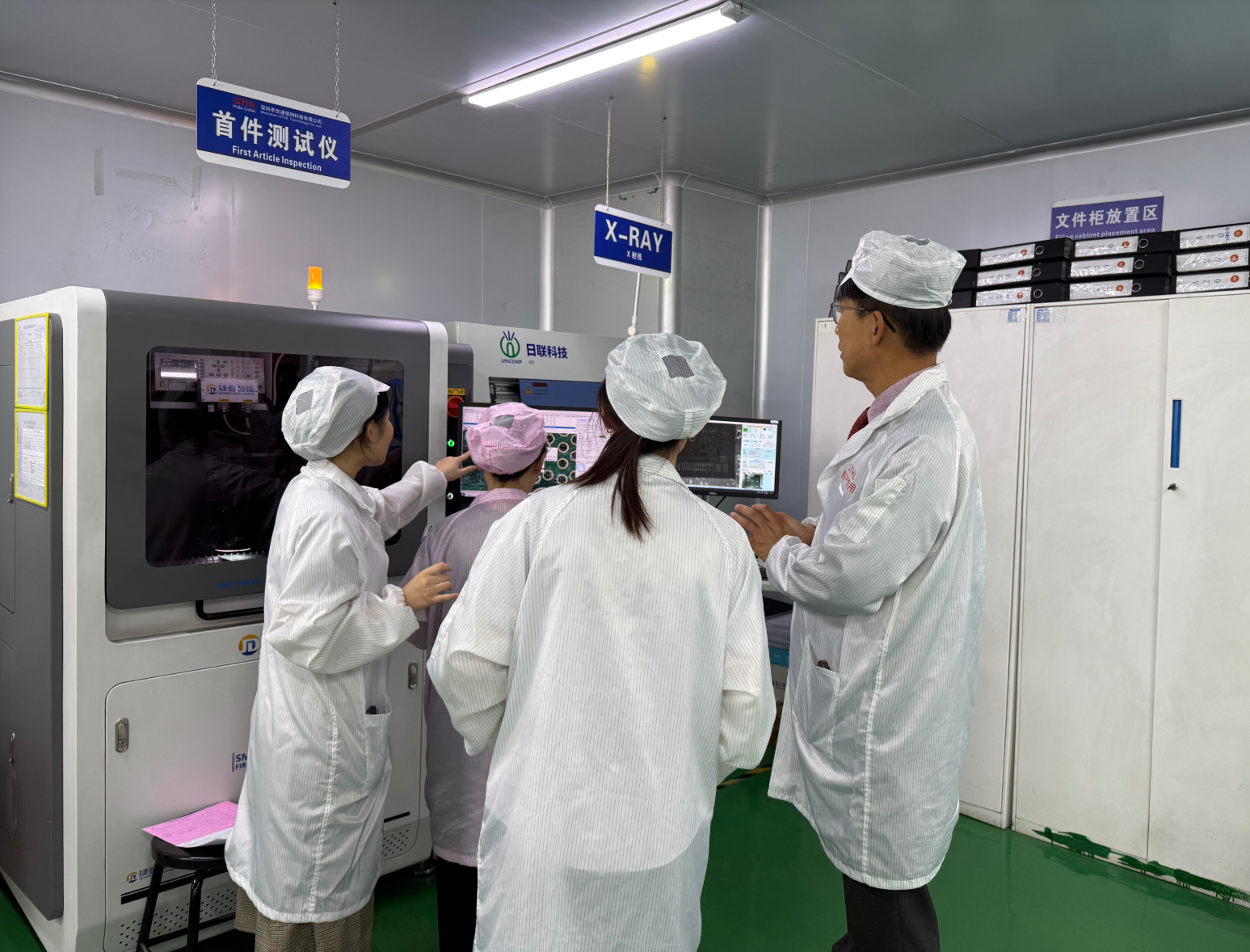
This is usually the part clients find most reassuring, because it's the part that catches what a visual inspection alone would miss. Beyond AOI, boards go through X-ray inspection to check hidden solder joints under BGA and QFN packages -- connections you'd otherwise never see until the board fails in the field. From there, boards move to ICT (In-Circuit Test) using flying-probe testing, followed by full functional testing on our dual FCT (Functional Circuit Test) lines. Final inspection includes OQC (Outgoing Quality Control) and 3D microscope verification before anything gets cleared for packing.
For customers running box-build or finished-device programs, we also operate 2 dedicated box-build assembly lines for labeling, Housing Assembly, and final packing -- so the board that leaves QC isn't the last step before it reaches your warehouse.
Why a certificate wall isn't the whole story
We do hold IATF16949 (automotive), ISO9001 (quality management), ISO13485 (medical devices), and ISO14001 (environmental) -- and they matter, because they force a documented, auditable process across the whole factory rather than a one-off effort for a big customer. But a certification describes a system that's supposed to be in place. A site visit is where a client actually checks whether it is. Our Korean visitors didn't ask to see the certificates on the wall -- they asked to see the SPI reject rate on the line running that day, and to watch a board go through ICT in real time.
What we'd suggest asking on your own visit
If you're evaluating a PCBA partner and a spec sheet isn't giving you enough to decide, here's what tends to actually reveal how a factory runs day to day: ask to see the DFM report for a recent project, not just the final board. Ask what happens to a batch that fails AOI -- is there a documented rework process, or does it just get quietly reworked off the books? Ask to see MES data for a specific batch number, not a summary dashboard. And ask where your production schedule sits relative to other jobs on the line right now -- a supplier that can answer that in real time is one that actually knows what's happening on their own floor.
Our Korean visitors left with photos of the SMT line mid-run, a copy of their DFM review notes, and a production schedule showing exactly where their first batch sits in the queue. Not a brochure.
If your team is weighing a PCBA partner and would rather see the floor than read another deck, we host client visits and virtual factory walkthroughs regularly -- reach out and we'll set one up.
Source :Shenzhen STHL Electronics Co., Ltd.
This article was originally published by IssueWire. Read the original article here.
More News

Hong Kong pianist John Lee does justice to Rachmaninov and more despite dry acoustics
The marketing of classical music concerts has increasingly focused on the musician rather than the music, with the often ephemeral cult of personality perceived as more valuable than the notes they play, at least in drawing an audience. So, it was refreshing to hear the fine young musician John Lee play. After studying at the Hong Kong Academy for Performing Arts, where he is now a member of the faculty, Lee earned a master’s degree from the Royal College of Music in London with distinction and...

'No one is safe' as Ebola outbreak surges to more than 10,000 cases, Africa's top doctor warns Canada
Africa's top doctor, who has called Canada home since 2013, tells CBC News there could be "massive" cross-border spread of Ebola in the months ahead as he calls for more international support.
Why GLP-1 users’ impact on food-inspired fragrance market is nothing to sniff at
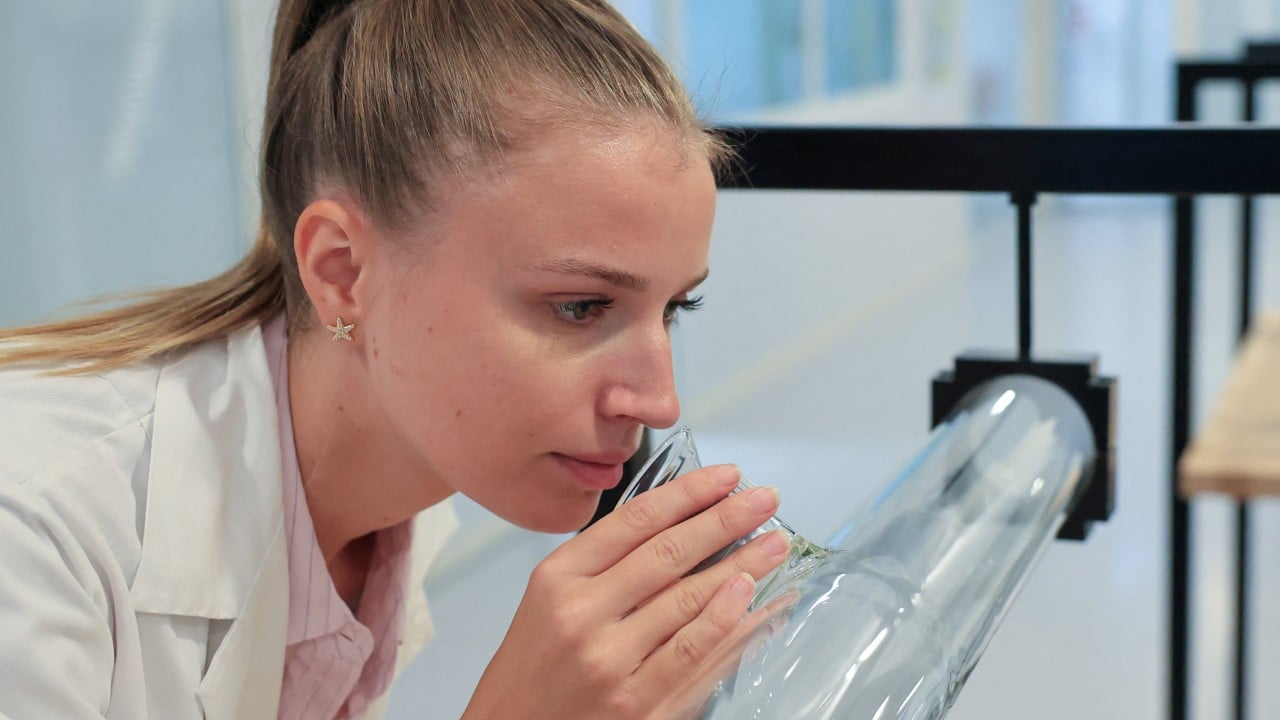
From cherry and banoffee pie to Tabasco and sesame, the list of food aromas popping up in luxury fragrances keeps growing. Now some perfume makers are starting to ask if weight-loss drugs might be reshaping what consumers want in a scent. So-called gourmand fragrances like Thierry Mugler’s pioneering candyfloss-inspired Angel and Nina Ricci’s toffee apple scent Nina have been around for decades. More recent growth in the segment has been attributed to the Covid-19 pandemic-era boom in online...

Autumn in Beijing, with more than leaves on the agenda
Autumn in Beijing, with more than leaves on the agenda

Non-Americans Are Sharing The Misconceptions They Had About The US Before Visiting, And I'm Laughing At A Lot Of These
"You can get a flu shot, a bottle of tequila, a Snickers bar, and pizza pockets all in the same place." View Entire Post ›

48 Things People Romanticize That Are Actually Miserable As F*ck To Experience, And We Need To Talk About Them NOW
"'Growing old together.' It's hard to deteriorate physically while watching your best friend suffer the same fate." View Entire Post ›

38 Travel Products To Pick Up NOW So You Aren’t In A Pinch Two Days Before Your Departure
Because spending an exorbitant amount of money on a universal adapter at the airport is NOT the vibe. View Entire Post ›

How betel nut chewing in China became a habit for millions, from emperors to commoners
The history of the betel nut, also known as the areca nut, stretches further back than previously thought. New research suggests that people on the Indonesian island of Sulawesi were enjoying its mind-altering effects as long as 25,000 years ago. The discovery began with two ancient skeletons whose teeth bore curious, deep grooves. Australian archaeologists suspected these were the result of repeatedly sucking on whole betel nuts. Chemical analysis subsequently detected traces of arecoline, the...
Yams vs sweet potatoes: the difference, nutrition and how to cook them
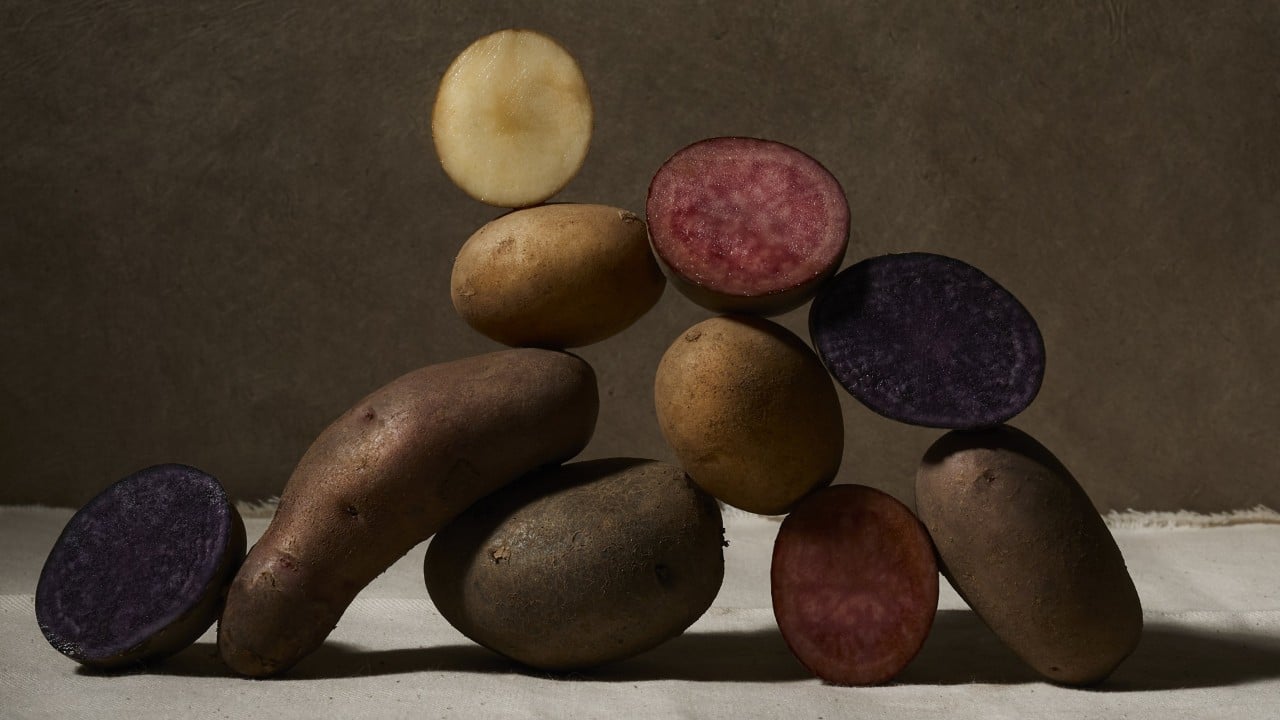
Widely known as Sam the Cooking Guy, Sam Zien is an enthusiastic proponent of sweet potatoes. He loves mashing them and seasoning with miso, butter and chopped spring onions. Or he cubes, boils and roasts the sweet potatoes, then adds a generous dollop of lemon yogurt, with sprinkles of dukkah, a mixture of chopped nuts and sesame seeds, seasoned with cumin, coriander and salt. Another way is to add sweet potatoes to quesadillas with Mexican chorizo, a highly seasoned fatty pork sausage, and...

10 expert tips to help you wake up in the winter feeling refreshed, happy and energised
As winter draws closer in some places and darker mornings become part of the daily routine, getting out of bed can feel more difficult than ever. Psychotherapist Shazna Khanom, head of clinical mental health at healthcare company Bupa in the UK, explains that the shorter days and reduction of daylight during autumn and winter can have a significant impact on our energy levels. “The darkness doesn’t just impact people’s mood – it can also change their energy levels and make them feel slower,” she...

Meet Sylvester Stallone’s youngest daughter, Scarlet Rose, who plays Spencer in Tulsa King
Taylor Sheridan’s hit crime drama Tulsa King is back with its fourth season, and is already the talk of Tinseltown. Led by Sylvester Stallone as Dwight “The General” Manfredi, a New York mafia capo who builds his own syndicate in Tulsa, Oklahoma, it is the most-watched television show on Paramount+ at the time of writing, according to FlixPatrol, and has already been renewed for a fifth season, per TVLine. Sharing the screen with Stallone are Martin Starr, Jay Will and Vincent Piazza, as well...

Travel Is Already Expensive, So Here Are 27 Useful Travel Products That Are *Not*
Handy, dandy, and all under $20. View Entire Post ›
YOUR NEWS, OUR NETWORK.
Do you have Great News you want to tell the world?
Be it updates about your business or your community, you can make sure that it’s heard by submitting your story to our network reaching hundreds of news sites across 6 verticals.